Showing posts with label LDS. Show all posts

Monday, June 2, 2025

A little teary today

 Why am I a little teary today?

  • A series of stressful dreams for the last two weeks. 
  • I woke up filled with a lot of fibromyalgia pain. Took a long time to get moving.
  • I had a long conversation with a ward member about her family, wishing there were only something I could do.
  • Another ward member suffering and feeling powerless to help
  • Thankful for a couple brethren who told me about the service they were giving
  • I bore my testimony in church about how our Heavenly Father communicates His love for each of us.
  • Took a lovely walk on a surprisingly hot day with Joy and Prince. We talked about Prince becoming an adult. Sometimes these days, it's all I can do not to just stare and stare at this nearly-grown young man. I am amazed at who he is becoming. I think of how dearly I'm going to miss him while he is at BYU. (As Emily says in Our Town, "Let's really look at one another! It goes so fast. We don't have time to look at one another.") 
  • We haven't really shared this publicly yet, but someone in our home is going to need an urgent surgery on the near side. I spent the day fasting and praying about that.
  • I didn't take a nap.
  • I worked on a new puzzle for a while and made great progress. (What does that have to do with feeling teary?) Well, I like puzzles because it feels like I'm taking chaos and putting it into a beautiful order, bit by bit. And I tend to want to work on them most when I'm feeling like I don't have control of things.
  • We played Great Dalmuti, and all five of us enjoyed it! Helping everyone enjoy the same activity feels like a real accomplishment some days.
  • As we read D&C 58, God tells His Saints that after the tribulations come the blessings. A child wanted to know why they had to do chores in this house, as if that were a tribulation and when exactly do the blessings come? I was likely too intense in my answer, and I feel bad about that.
  • I'm reading these wonderful old blogs about Princess learning to say words and Prince discovering math for himself at age 4 ... before going off to BYU as a math major.

So, dear diary, that's why I'm feeling a little teary today, like, all day.


Monday, May 16, 2022

Codex Boturini as read by a Latter-day Saint

Back in the mid-1700s there was a fellow named Boturini who traveled through Central America gathering historical writings about the Aztecs and other native peoples. The Codex that bears his name depicts the story the Azteca/Mexica people told about where they came from and some of their history. Here is part of the first page:


First I'm going to quote the Wiki article on Codex Boturini, then I'm going to reread it the way it sounds to me.

The codex depicts the events of the Mexica migration from Aztlán and their history from the years 1168 to 1355 AD.[3] It begins with a priest leading Chimalma, fabled ancestor of the Azteca, from Aztlán via a boat.[18] Once they arrive at the shore, near Colhuacan, they build a sheltered altar for their god, Huitzilopochtli, who ordered this migration.[19] There they also encounter eight tribes that desire to accompany the Azteca.[20][d] The Azteca agree and the nine tribes set out under the leadership of the four god-bearers, Chimalma, Apanecatl, Cuauhcoatl, and Tezcacoatl, each carrying a tlaquimilolli.[21]

Over folios 3 and 4, the Azteca are transformed into the Mexica when Huitzilopochtli chooses them to be his people and teaches them to sacrifice blood to him. He also instigates the split of the Mexica from the other eight tribes ... . An Aztec (left) carries out Huitzilopochtli's instruction to break from the other eight tribes in a nighttime discussion. ...

What I hear:

It begins with a priest named Lehi, traveling from Jerusalem via a boat [1st Nephi 2-17]. Once they arrive at the shore, they build an altar for their god, Jehovah, who ordered this migration [1st Nephi 18]. They also encounter other people who accompany them, under the leadership of his four sons, Laman, Lemuel, Sam, and Nephi. The Lehites are transformed into Nephites when God chooses them to be his people and teaches them to sacrifice [animal] blood to him. He tells Nephi to split from the other tribes [before they kill him]. Nephi and the righteous flee in the nighttime [2nd Nephi 5].

For a mostly-oral tradition passed down over 1000 years until it's drawn up in the Codex, I find the parallels between the journeys more than coincidental. I found Boturini from reading Elder Moses Thatcher's pamphlet, Divine Origin of the Book of Mormon from the 1880s. 

Friday, February 15, 2019

Missionaries can call home on PDay

When I was on my mission in Germany, I wrote to my parents every week and called them at Mother's Day and Christmas. That's what was allowed. More recently, missionaries were given permission to email instead of write letters. That was great. The Church of Jesus Christ of Latter-day Saints has announced that missionaries may now text, call home, and/or video chat weekly during their off days, plus on special occasions like Father's Day or birthdays.

As I read that, I remembered fondly a panic I gave my parents. I was sick (again!) and the doctor said he needed to have me checked for Tuberculosis because nothing else seemed to fit. I wrote my parents about that, then a few days later got tested. My tests were just fine - no problems at all - so I forgot about it.

My parents got my letter about TB and started worrying.
A week later, no letter showed up. I had sent it, but mail sometimes doesn't arrive on time. They wrote me and asked me for confirmation that everything was okay.
Two weeks later, no letter showed up from me, and I didn't one from them either. They wrote me again, frantic.
Three weeks later I got both of their letters and wrote them right away. My weekly letters finally showed up, which reassured them I WAS STILL ALIVE but didn't tell them anything about the TB because I hadn't known they were worried yet when I sent those.
A solid month of worry later they finally got a letter from me reassuring them I was okay. I'm not 100% certain, but I feel like they may have called my mission president at some point to hear I was okay, and Pres. Schubert kindly asked me to write my parents and let them know everything was okay. I reassured him that I already had.

On my mission in Neubrandenburg,
recording a radio program about Jesus.
Now, yes, email would have solved most of that. But a quick text would've saved them a lot of grief even faster!

I think about what a relief it would have been to have been able to chat with them while I was in the hospital - once getting nails put in my arm when I broke my arm on black ice, the other time getting the nails taken out.

So glad this is happening!

Saturday, October 6, 2018

Farewell to a hymn

With the First Presidency's announcement that Sunday meetings of the Church of Jesus Christ of Latter-day Saints will be shortened to two hours, there are a lot of changes. For the most part, I am excited to move forward and see what the Lord has planned. When they announced three years ago that they were going to put a renewed and increased emphasis on making the Sabbath a delight, and worshipping at home, I had no idea they were preparing us for this. And who knows what this is preparing us for!?

But amid the rush and excitement, I do need to mourn for one of the changes. I need to in part because I know almost no one else will mourn its passing: The second hour will not begin with a hymn.

Thursday, August 9, 2018

Throwback Thursday - Family pictures after the wedding


May 28, 2005

Our triumphal exit from the temple.

So, funny little story about our least-favorite part of the day: In a wedding at an LDS temple, you don't need a tux or any of the usual worldly finery, so I wore my temple clothing for the wedding. After the ceremony, I went to change and only then realized I'd left the tux in the car. We sent my brother to find it (after he got changed). He got lost, I think. Dad went to find him. It took a while. Eventually they found me again and I got dressed and came out to find Joy.

She meanwhile had been waiting for me. Really brand-newly married and her husband was nowhere to be found! For more than half an hour! It was very disconcerting. When I finally emerged, one of the temple workers had her hide and made me spend some time waiting on her. "That's the way things are supposed to be! The man waiting on the woman!" So I waited in a side room until we could be rejoined. It really was her least-favorite part of the wedding day. So when we emerged from a side door to find our families waiting (patiently) on the two of us, it was truly a moment of triumph. Let the wild rumpus start!

In the 13 years since, I can say I spend very little time waiting on Joy to get ready. I am a blessed man, in many ways.


The rest of the pictures are of our family. I'm labeling everyone for family history purposes

Wednesday, August 1, 2018

Jolly Old King Benjamin

In 2005 I came up with the following parody of "Jolly Old Saint Nicholas," using the teachings of King Benjamin from Mosiah chapters 2-4 in the Book of Mormon.


Image result for king benjamin towerJolly old King Benjamin said: “Pitch your tents this way.
Don’t you trifle with the words that I’m going to say.
Jesus Christ is coming soon, so my countrymen,
Choose this day whom you will serve and be born again.

“I have served my whole life through that you might be taught:
When you serve your fellow man, alone then you serve God.
And if I, your chosen king, have labored to serve you,
Ought ye not to do the same: serve each other too?

“Oh what thanks we all should give to our Heavn’ly King!
Though we serve Him, we are just unprofitable things.
First off, He created us.  We are in His debt.
Then we serve, He blesses us, and we aren’t out yet.

Related image
“When the clock was striking twelve, I was fast asleep.
There appeared an angel bright, and my heart did leap.
He gave me a message clear, and I know ‘tis true:
Jesus is the only way salvation comes to you.

“We must be little kids, and be easily taught;
For you know the nat’ral man’s an enemy to God.
Yield unto the Holy Ghost, put off the nat’ral man,
Trust in God, be humble too; with His help you can.

“If you’ve felt to sing the song of redeeming love
Keep in mind how great and wise is the Lord above,
Then, my friends, you will retain remission of your sin
And you will teach holy things to your children.

“Last of all, please watch yourselves, your thoughts and words and deeds.
Do not let your brothers beg – answer all their needs.
See that ye do all these things in order and wisdom,
Then one day you will return to God’s great kingdom.”


Image result for lds king benjamin

Sunday, July 15, 2018

Something against fruit

This hilarious thing happened while I was in Atlanta. My colleagues and I took an Uber to the Ebenezer church and fell into conversation with the driver. Rather, my good friend Jim fell into conversation while I sat in the back, looking at the city.

I forget now how it happened, but they started talking about the local hookah scene, and how there was a shop that had let you smoke fruit. Jim - ever eager to toy with any idea, serious or fanciful - expressed enthusiasm to go there. It would be a cultural exchange for the faculty! Now, at our weekly meetings, I am generally his devoted sidekick, playing along with any scheme, but this one was not for me. I teased, "Jim, what are you getting me into now?"

After we arrived and I got out of the car, the driver said to Jim, "Your friend really has something against fruit!"

Jim and I doubled over laughing later as he told me. The thought that someone assumed it was the fruit and not the hookah smoking was so bizarre!

Jim explained to him that, no, his friend was a Mormon and they don't smoke or drink alcohol. The driver asked him what a Mormon is. Jim told him the proper name of the church, and it didn't ring any bells. Here was a fellow who had never even heard of us! Boy, I wish Jim had called me over then so I could chat with him! Jim laughed at my enthusiasm, suggesting I could have told him to keep the meter running while we drove around the town and teach him a discussion or two. That ... wasn't a bad idea!

Instead, Jim had given him a very brief introduction - having spent a fair amount of time with missionaries, other latter-day saints, and me, he has a decent knowledge base - and invited him to find out more at mormon.org. Not bad.

(Jim and I were playing prior to a forum/debate one day. Here's a video of how we thought about greeting our class on the first day in this one lecture hall.)

Sunday, June 24, 2018

Appreciating the Parables in Primary

When the Church asked us to have two adults in every primary classroom, that meant I'm joining my wife for sunbeams (3-4 year olds) every week until someone manages to scrounge up a second teacher. Today Joy asked me to prepare to share our Lord's parable of the prodigal son. The lesson was about recognizing our God-given emotions and so I had a set of pictures with a happy, sad, angry, or scared face to work with.

It was a new and very deeply moving experience for me. Not only retelling, but walking the kids through the emotions of the people - how sad the father was that his younger son had left, wondering if he would ever see him again, the joy of the return; the youth's fear as he wondered where his next meal would come from and his sorrow for the hurt he had caused himself, his father, and possibly others, his shame at who he had become; his brother's jealousy and anger. I was telling the story to them fresh and new - as far as they were concerned hearing it for the first time because even though I know JT has heard it multiple times before, long-term memory is not a 4 year old's forte.

It was powerful. I wept. Twice, just a little. I know those people our Savior described. I've seen those families or been those characters. I've tasted just a little tiny piece of their pain and rejoiced with them too.

How unmatched and glorious are these vignettes He has given us! And how glad I was to be in primary today!

Sunday, June 17, 2018

Disproportionate Value

I read a post this week about what a special moment it is when a speaker, teacher, or other performer focuses their attention on just one person in the audience:
The guy he called on stage experienced a moment of transformation and profound personal development and courage. And the benefit wasn’t just for him. Everyone in the audience shared in that moment and shared in his victory. There’s no way we could all have gotten up to that podium in the time available, but somehow, by just touching one person, the speaker touched all of us. ... Whether or not we are the ones being called on stage, we share in the same transformative moment when a speaker or performer chooses to bring disproportionate value to just one of us.
I thought of that idea in gospel terms. The prophets and apostles are some of those whom God calls on stage before all of us. They receive particular and especial tutelage and training, "disproportionate value" - in part because of their preparation and work before, but also because of what God then wants them to do for us.

Image result for god speaks to mosesGod spoke to Moses in the burning bush before he had done much of significance. He called Samuel as a boy. Samson and Gideon, Isaiah and Ezekiel, Peter and Paul, Joseph of Egypt and Joseph Smith and many others have been called up onstage to experience moments of "transformation and profound personal development." In many of these cases, God called them very much just out of the audience - He knew who they could become, but they were called well before they had done anything that would mark them out as special before that moment. I think particularly of the Brother of Jared in the Book of Mormon, who saw first the finger and then spirit body of Jesus Christ before He came to earth, "and all this, that this man might know that He was God" (Ether 3:18). I thrill to reread these accounts of regular people, with whom "God spoke face to face as one speaketh unto his friend" (Exo 33:11).
Image result for brother of jared

Because God gives them this extra training, they in turn bring a great deal of value to others. Everyone in the audience shares in that moment, and somehow, by just touching one person, God touches all of us. The children of Israel may not have been ready for the promised land or to enter into God's presence the way Moses was, but all the people were blessed because God reached down and touched him. Seeing that God speaks to people of different nations, including Deborah and Samuel the Lamanite and Gerrit W. Gong, helps people of diverse backgrounds see that "all are alike unto God" (2nd Nephi 26:33) and He "is no respecter of persons" (Acts 10:34).

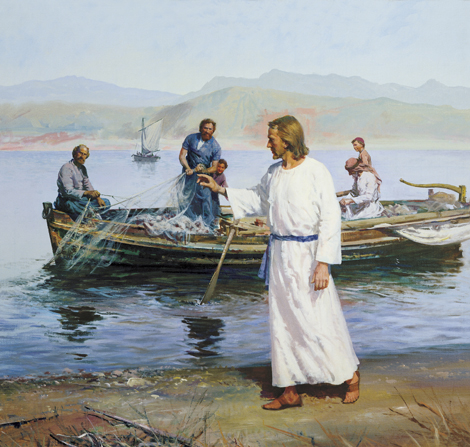
Image result for jesus calls fishermenBecause of seeing His interactions with a few, we can have hope and faith in His dealings with us that are less public and less visible. We trust that we too can receive revelation for our lives and callings, even in our weakness. While there is a temptation to say, "Yes, but that Stephen the martyr, and I'm just Steve" we remember that each of these people were called up onstage not because of anything they had previously done. Moses was an outcast shepherd and Peter a fisherman. There is no limit to what God can do through and make of a pliable and humble heart.
Image result for joseph first vision

One of my favorite teachings of Joseph Smith is this: "God hath not revealed anything to Joseph, but what He will make known unto the Twelve, and even the least Saint may know all things as fast as he is able to bear them, for the day must come when no man need say to his neighbor, Know ye the Lord; for all shall know Him … from the least to the greatest [see Jeremiah 31:34]" (emphasis added).

What blessing and privilege, hope and faith, are ours because of the disproportionate value God bestows on a few publicly!

Monday, June 11, 2018

Fun things we did in April: rodeo, court of honor, and chicken coops

Even before the Brethren counseled the high priests and elders quorums to combine, ours were busy working at a friend's house to expand and reinforce his chicken coop against a bobcat (of some kind) that broke through the last one. Hopefully if it holds up under big, strong elders with power staple guns, it'll hold up under a 40-pound critter. The kids helped hold the screws for me to drill into the wood.


I took the kids to a program thrown by the Tarleton outdoor and wildlife clubs. (I forget what Joy was doing at the time - maybe visiting the temple.)

JT was nervous about Smokey the Bear at first, but his love of teddy bears eventually won out. He enjoyed the ring toss while Princess painted a paper-plate snake, and all the kids enjoyed fishing. (Though fishing was rather difficult for Superstar, what with two arms being in a cast and all. Hard to cast in casts, y'know?)

Tuesday, May 15, 2018

A Sunday Confession

Sunday morning I was on a roll. Did some prep for seminary, breakfast in bed for Joy, all the kids bathed and dressed for church, and I even had a few minutes left over to do some extra gospel study before we left. I lounged by the front door studying a General Conference address from 1903, where Elder Abraham O. Woodruff (son of Wilford Woodruff) was telling the congregation to be more diligent about the little things.
If I were choosing a body of men who could be depended upon to always do the right thing in this kingdom, I would choose men who ... uphold the lesser as well as the higher Priesthood; and who are good, reliable men in the respective wards, not men who work only on dress parade. Almost any one will do that, but it is not every one who will get down and dig, who will work in the wards, and labor diligently for the upbuilding of the kingdom of God when probably they are seen only by the Lord. … It is in these little affairs of life that we show our love for the work of God. If we really love the work, there is nothing, no matter how small it may be, that we will not be glad to do for the upbuilding of the kingdom, whether it be seen of men or not. God sees and knows our labors, and he will reward us sooner or later, according to the deeds done in the flesh. Therefore, I pray that we may give more attention to the details of life.
Feeling self-satisfied, I agreed thoroughly. We need more reliable people who will do what they say and do the little things, though unnoticed, to serve and make things work. Absolutely.

We left early for church so I could warm up on the organ before the Mother's Day program. As we entered the hallway, I noticed a speck of something on the floor. Then another couple specks. Then a whole crumbled cookie. ...

At first I thought whoever had been in charge of cleaning the church this week had not been terribly attentive to detail. Then it started to look like they hadn't done a thing! I turned to Joy to comment on it when I remembered.

IT WAS OUR TURN!

We had both completely forgotten. We never wrote it on the calendar. I was working all day and night grading papers and had been so feeling rotten at one point I got some substitutes to finish off seminary for me the last week. It was our turn!

Our little family kicked into overdrive, alone there in the church - pick up every speck we can find, put out the rest of the chairs, organize the hymnals, make sure there's toilet paper ... ooo and a couple other things to take care of in there, oh dear.

And this little voice said to me - very smugly - "not every one will get down and dig, who will work in the wards, and labor diligently for the upbuilding [NOTICE THE BUILDING IN THAT PHRASE, DERRILL?] the upBUILDING of the kingdom of God when probably they are seen only by the Lord. … It is in these little affairs of life [I think you missed a little affair over there] that we show our love for the work of God. ..."

Oh dear. I think we got the place mostly-acceptable before church started. If you noticed something amiss, it's my fault. I'm sorry. I'll do better next time. 

Sunday, October 8, 2017

What Nephi doesn't say

[This is part two of a discussion of Hardy's analysis of Nephi and Boyce's charges against that analysis. In part one (see last post) I was trying to speak positively and to praise where I could. That, sadly, is not my point today. I am having a discussion with some other seminary teachers about why I don't recommend Hardy to seminary students.]

The authors of the Book of Mormon (and Mormon in particular) mention repeatedly the difficulty and frustration of being able to include so little of what happened among the Nephites. Nephi has much the same difficulty: an 8 year trek through the Arabian peninsula to the land of Bountiful is shortened to essentially one chapter and one event that was particularly harsh for his family. The next 30-40 years of 2nd Nephi are summarized in a few verses so that he can spend the rest of that book entirely on recording and expounding on the teachings of his father, his brother, and his favorite prophet. If his record is to include only the most sacred writings, then there has to be a great sifting and winnowing to keep only the most important records.

In his book, Understanding the Book of Mormon, Grant Hardy encourages us to ponder the details of what was left out and to construct a narrative that explains what was left out and why. As he put it:
[Literary interpretation] is not a matter of discovering truths about a world so much as assigning thematic significance to component parts of a work. It is a search for coherence and sense. It involves making connections by subsuming more and more elements in a work under a network of thematic elements.

Sunday, October 1, 2017

Reblog: Book Review of Understanding the Book of Mormon

In 2011 I was writing at a different blog which is now behind a password. That Christmas I received Grant Hardy's Understanding the Book of Mormon: A Reader's Guide. I wrote the following review at that time.

Recently I got into a conversation on Facebook on this book and a remarkably lengthy article written by Duane Boyce calling out Hardy (and others) for bad religious scholarship. I find the Facebook format unsatisfactory when someone needs a lengthy, detailed answer. To provide one, I'm copying here my old review and the follow up posts I wrote 6 years ago. Six years ago my goal was to be honest but overall positive, so while I suggest that some parts of his treatment of Nephi (and Helaman) bothered me then, I didn't really go into detail about what exactly or why. In the next post on this blog I will go into a few more specifics about why I find Hardy's treatment of Nephi so unsatisfactory and where I agree and disagree with Boyce's criticism of Hardy's book. I've added a couple comments in [brackets] below.

The tl;dr summary of what I wrote 6 years ago is: "I recommend his book for people interested in treating the Book of Mormon like literature. He does his job and he does it well. I really appreciate insights he helped me see in Mormon and Moroni. Just don't go looking for something that isn't there. ... Hardy's book is not about understanding the messages of the Book of Mormon. There is very little talk about the Atonement or Christianity itself, how Nephite Christianity is different, how the Book of Mormon expounds on and complements the Bible's message of salvation, what the mission of Jesus Christ is or any of the fundamental points the prophets set out to make. ... Of course, given how didactic the Book of Mormon is (one of his favorite words), he may feel it unnecessary: you can't read the Book of Mormon seriously without coming away with its testimony of Jesus Christ. Hardy wants to present something New. This is an intellectual exercise. I like such exercises. The thing is, if this were all anyone read, they would not come away Understanding the Book of Mormon."

Mormon Helping Hands east of Houston

So there was this hurricane that hit Texas a while back. You might've heard about it </hipster>. The Church of Jesus Christ of Latter-day Saints called for volunteers from around the area to drive down to Houston and other locales to help.

I went down two weekends ago with 10 other people from my local church and again last weekend with a new group of 10. Someone else was our team leader each time, but I served as assistant since I was going both times. We were joined by 150-200 others from our stake each weekend (that's the Weatherford area) and approximately 10,000 Mormons from Texas and other areas nearby.

No. I AM your father.
We arrived to help muck out houses. Mucking out means we took absolutely everything that wasn't salvageable (just about everything) out of the house to be trashed, tore out the sheet rock and drywall and insulation, and left a barebones skeleton frame in the house. The first weekend we spent the entire time helping one lady, whom I will call "Mary" - about 73 years old, she's a diabetic widow with some pretty serious mold allergies. Mold is one of the biggest problems from this flood as absolutely everything gets thoroughly soaked. Because of the mold, the house smelled absolutely dreadful and I was thankful we had taken the time to buy an industrial grade air filter because of my mold allergies. In the picture you can see the water line that went up to about 4 feet.

But if the water is 4 feet high, then it seeped up the insulation to 5-6 feet and that meant all the walls had to be taken down completely. We couldn't finish her house in one weekend, so we finished the job when we came back the second weekend. We also got to help another couple where the water had only gone up 1-2 feet. It still meant they lost most of their things and we had to remove the drywall up to 4 feet.

Saturday, September 9, 2017

Religious reading recommendations

So out of all those books (see last post), I must have some opinions, right? Matter of fact, I do.

CS Lewis' George MacDonald was glorious. It's one of the very few books I have ever managed to read slowly because I was constantly setting it down to ponder more deeply on a new insight. I need to read this again and again. In the introduction, Lewis writes "From his own father, he said, he first learned that Fatherhood must be at the core of the universe. He was thus prepared in an unusual way to teach that religion in which the relation of Father and Son is of all relations the most central." In that regard MacDonald said:
God does not ... make us always feel right, desire good, love purity, aspire after Him and His Will. ... The truth is this: He wants to make us in His own image, choosing the good, refusing the evil. How should He effect this if He were always moving us from within, as He does at divine intervals, toward the beauty of holiness? ... For God made our individuality as well as, and a greater marvel than, our dependence ... [so] that freedom should bind us divinely dearer to Himself, with a new and inscrutable marvel of love; for ... the freer the man, the stronger the bond that binds him to Him who made his freedom.
 Also: "A man is in bondage to whatever he cannot part with that is less than himself" and "He who seeks the Father more than anything He can give, is likely to have what he asks, for he is not likely to ask amiss."

Monday, September 4, 2017

Temples dot the Wasatch front


While driving up and down Utah and Nevada, we decided to try to show the kids as many temples as we could. It got them thinking about the temple and temple work a lot more, so they asked a lot of great questions about what happens there and why Mommy and Daddy love the temple so much.

Living just three blocks from a temple helped - the first temple each day came rather quickly. JT would call out "'Roni! Mroni!" when he saw the angel Moroni on them.

This summer was a time of dedicated temple service for us. LDS temple are there to unite families across multiple generations. We do vicarious ordinance work for them so they can have the same blessings of the gospel that we do. (more here).

A couple years ago Joy got really interested in doing some family history and she found and prepared the names of something like 60 family members for us to do temple work for. I admit the reason she did only 60 is because I asked her to stop at 50, knowing that at our usual pace of each of us doing one person each month, that was all we could manage in two years. We kept at it.

Then last year I got more interested in family history also. Playing around with both my history and Joy's, I prepared enough names to take us up to about 100 waiting on us. Oopsies.

As we counseled together about how we were going to get this done, we decided to do everything we could to more than double our temple work.

Joy: I had told Derrill, no, we didn't have the time. Then a week or so later I was feeling like I needed extra help from Heavenly Father. The answer I got was that I should go to the temple every other week. Then when I talked to you about it I remembered your insistence on doing more work for the dead, so yours was more altruistic *lol*

Over the summer, at least one of us was in the temple every week. In Brigham that meant a leisurely morning stroll for each of us to the temple three blocks away. In Stephenville that means a full day trip. We regularly sent one of us up to Dallas (2 hours away with traffic) first thing in the morning and they stayed there until the evening. It's been a wonderful, fulfilling, peaceful time.

The only "problem" is that despite taking care of more than 30 people's ordinance work, we still have 100+ people to do because I keep stumbling across more relatives who need work. 

Friday, August 4, 2017

The importance of one inspired word: residual

In 2002 I was graduating from BYU. It was a great day and for the most part a very happy one. There was only one thing troubling me, a task I had not been able to accomplish. I had worked on it and done my dead-level best to fulfill it, but had not been able to. I worried about it (just a little) that day. Had I done right? Had I really done everything I could? Had I missed something important?

Our graduation speaker was Pres. Henry B. Eyring, an apostle of Jesus Christ. Most of his speech was about the school motto: Enter to Learn, Go Forth to Serve. He emphasized the second part, going forth to serve. It was a nice little graduation speech.

Then in the middle-end of his speech, he used a word that was very significant to me: residual. He told us to do the best we can, and leave the residual in God's hands. In econometrics - the statistics that economists use, and a class I had not only taken but TAd 3 times - the residual is an error term tacked onto the end of an equation for all the things we don't know and can't control.

I suddenly felt the beginnings of understanding a very important principle. Yes, we cannot know all that God has planned or control others' choices. We can only control what we can control. But we can trust God for all that we cannot control, that the end will bring us out alright, that even the greatest trials of our life can be for our experience and benefit. Trust Him for the rest.

That one word and that phrase stuck with me for the last 15 years. How important and what a relief it was to feel that I had done all I could and it was okay to leave the residual in God's hands! I went away comforted and at peace.

I was thinking of that experience again last week for some reason and looked up Pres. Eyring's speech. It turns out he only used the word residual once - enough for me to latch onto it - and otherwise used the term "residue." Maybe my hearing wasn't 20/20 even then and I heard residual because I'd spent so much time thinking about it. Here is what he said after quoting D&C 103:35-40:
Your key and mine to rising to our potential as servants is to know our Master, to do for Him what we can, and be content to leave the residue in His hands. Let me give you an example that will face you in the days ahead. You will be torn between the demands to put bread on the table and a roof over your head, to take care of a family need, to respond to the cries of the widows or the orphans around you, and at the same time to meet the requirements of the calling you have accepted in the Church. When that happens, you will be sorely tempted to murmur, perhaps even to complain. 
But remember that you serve a Master who loves you, who knows you, and who is all-powerful. He has created not demands for your service but opportunities for your growth. You can pray to Him with confidence and ask, “What would you have me do next?” If you listen humbly and with faith, you will feel an answer. And you will, if you are wise and good, set about to do that which your Master has commanded. And you will leave the residue in His hands. As His servant I promise you that you will find that some of those residual tasks you left will be done when you return to them. Others will have been prepared for you. And you will be the stronger for the task you already tackled. 
Then, when you pray again, an answer will come again. And you will move on to the next task, at peace and not complaining. Sometimes you may not feel an answer to your prayer because your Master may not care which task you start next. But He will care that you asked. And whatever you choose to do next, you will know that the residue is in His hands.

Sunday, July 16, 2017

Wedding #2 - Salt Lake City

We got tucked into our home-tel none too soon before we drove back south to Salt Lake City for cousin Ari's sealing. Ari is the eldest son of Joy's cousin-sister Laurel (who we call Lala) and Rich. We stayed with them back when we first got married. Back then, I befriended the 10-yr old Ari by playing Star Wars Battlefield with such ineptness that I won the Traitor award for killing more of my own squad than the enemy. Ari is an amazingly talented young man who dances better than I even dreamed of doing. He recently returned from a mission to South Korea, whereupon he swiftly and successfully wooed Paula.


We arrived early so we could take the kids on a tour of Temple Square. At the visitor's center we listened to the Christus statue presentation and watched a movie about family, listened to someone practice on the Mormon Tabernacle Organ*, and ate lunch under the Seagull monument. There was apparently a massive car crash on the 15 coming north to SLC, so the rest of the family was delayed and I waited in the children's playroom at the temple for a while before someone came to relieve me and the ceremony was set to begin.

Meeting family we haven't seen in ages is great. Reuniting with family we haven't seen in ages at the temple of God is even better.** The sealing ceremony was beautiful. I hope Ari and Paula wrote down some notes of what the sealer told them before they were married for time and eternity. That was the first thing Joy and I did after our sealing: stand in the hallway scribbling everything we could remember on the envelope that our wedding certificate came in. I told Joy we'd have to dig around in our journals when we got home to find those notes again.

While waiting for the bride and groom to change and come out to meet the rest of the wedding party for pictures, we got some pictures of the kids playing on the steps of the Salt Lake Temple. We got to join some of the family pics, but the kids eventually got antsy enough I took them off for a bit more Temple Square touring.


We visited this statue of Hyrum Smith, the Three Witnesses, John the Baptist restoring the Aaronic Priesthood to Joseph Smith, and these gorgeous pink flowers. We also learned a little about how they built the Salt Lake temple and saw the model of its construction before we were all in desperate need of a long sit down and to refresh our blood sugar levels before driving down to Orem for the reception. (see next post)
.

* - I got to play that organ back in 1997 as part of a class I took at BYU on organ registration (that means picking the right sounds for the organ to make to get a particular feel).
** -  The only downside is that the temple workers had to make a very soft announcement over a microphone every so often to remind us in the waiting area to keep it to a whisper to preserve reverence - an announcement she had to make so often I jokingly expected her to mention not to leave bags unattended and to report any suspicious behavior to TSA. Way to be reverent, Derrill!

Saturday, December 3, 2016

Creating a few good excuses

I wrote this post at least 4 years ago, but never posted it for some reason. I stumbled on it today and thought it deserved sharing.
---------------------------------------------------------------

My brother was teaching the priesthood lesson this week from the Pres. George Albert Smith manual. It was the third or so in a row in being member missionaries. I forget the exact words Steve used, but he and the lesson talk about the fact that you cannot "scold" anyone into Heaven, "but I want to tell you that we can love them into the direction of our Father in heaven..."
When Steve quoted the second great commandment, to love our neighbors as ourselves, it got me thinking. The command is NOT to convert a bunch of people, and therefore love them because it's a useful tactic. The command is to love them, and as a happy result of that you will occasionally get the chance to be of service to them.
--------

We had a few too many visits from a friendly, agreeable, thoughtful plumber this summer. When his work was done, I asked if he had ever been given the opportunity to have a Book of Mormon. He confirmed that he had several LDS friends and he knew it was required in many churches to try to win converts. I wasn't sure how to respond. He didn't sound offended, but I could tell the gesture was not received the way I felt.

He was a nice guy. He had made our lives better working harder than was strictly required. I wanted to thank him with more than money. I wanted to form a friendship in the little time we have in the States, and quite frankly the Church is the primary way I socialize.

He was one of many people whose lives I would like to bless with the thing that has given me the greatest joy. The thing is, most of those people I'm going to see again, so I can comfortably keep putting off that invitation - mostly in the fear that it and I will be rejected and taken in one of many wrong ways. But I cared for someone and wanted to share.

--------

Before we moved to Nigeria, I was an assistant clerk keeping track of membership records and then executive secretary. Among the things I did was track attendance. I didn't feel that was enough. I wanted to know if someone was missing. I not only counted heads, but learned to recognize everyone by the back of their head so I could tell if someone was missing for a few weeks and make sure the proper people had noticed and were taking care of them.

When new people moved in - a frequent occurrence in student areas - I ran over to greet them. This was a very new phenomenon for me. I'd always been content (as music chair or choir director) to find out if someone had musical talents and rush over once someone told me they sang. Now it was my job to get the information of new members so I could request their records into the area. But more than that, I wanted them to feel welcomed and appreciated. I wanted them to stay.

Being membership clerk gave me a script to follow, and that was the support/crutch I needed to be able to get over my awkwardness and try saying hello. Home and visiting teaching is not just a duty to visit once a month, but an opportunity both to come to love and serve someone and to open our homes and hearts to someone we might not otherwise have socialized with. I'm not comfortable in a lot of social interactions, but being a home teacher, a clerk, a choir director, whoever, gives me a role to fill and helps me start reaching out.

Callings and assignments - and even missionary duties - are opportunities to get to know people, to befriend them, to learn even to love them.

They were all excuses. An excuse to love someone.

Thursday, December 1, 2016

Voortrekker Monument - the pioneers

On a hill overlooking Pretoria stands the Vortrekker Monument - a tower to remember the Boer pioneers. As I studied their history, I was shocked at the parallels with my own, Utah Mormon pioneer history.

At about the same time my ancestors were being chased by mobs from Ohio to Missouri to Illinois to Utah (1830s-1860s) the Boer settlers from Cape Town fled what they saw as British oppression to the northeast (such as Pretoria). They saw themselves as religious refugees, God's chosen people. They traveled in covered wagons across the veld to seek Zion where they could worship in peace. Many of the same themes are shared in each group's diaries and speeches. It was deeply moving for me and helped a little Mormon boy from California feel right at home.

Not that there aren't some very important differences. Mormon pioneers got along remarkably well with the natives in the region, particularly in historical context. Vortrekkers left their homes in part (point #3 in their manifesto) because they were angry their African slaves had been freed and they wanted the liberty to "maintain proper relations between master and servant" (point #5). One of the great moments in their history was the Battle of Blood River in Dec 1838. 470 Vortrekkers (led by Pretorius - gee, where did Pretoria get its name?) with muskets defeated 21,000 Zulu warriors armed with spears.


A Vortrekker mother (left) prepares to flee with her children. She is protected on the four corners by leaders like Pretorias and Piet Retief (right) from the dangers of the trails (the famished cattle around here, below).


We took the elevator up (small children), but there are plenty of stairs if you would prefer. The view from the top is impressive.


There are also a few more steps to climb up a dome and then you can look ALL the WAY DOWWW..., um, how about if I don't look down there, k? I'll just stick my camera over the edge - I'm getting dizzy remembering it - and take a shot of the entry hall and the basement below...

Let's go back down, shall we, Superstar? Thanks!

The sub-basement has a collection of memorabilia, including a covered wagon and this view of a night on the veld. Another post will show some of the arts we found. I got really excited about it.

The entry hall has a giant stone mural all around the walls depicting the Vortrekkers' trek. This is one of the videos I took of it. It depicts them leaving Cape Colony in 1835, a Zulu attack in 1836 and another in 1837, Retief is sworn in as their leader, and his negotiations with some Zulu leaders.